

ADVERTISEMENT:
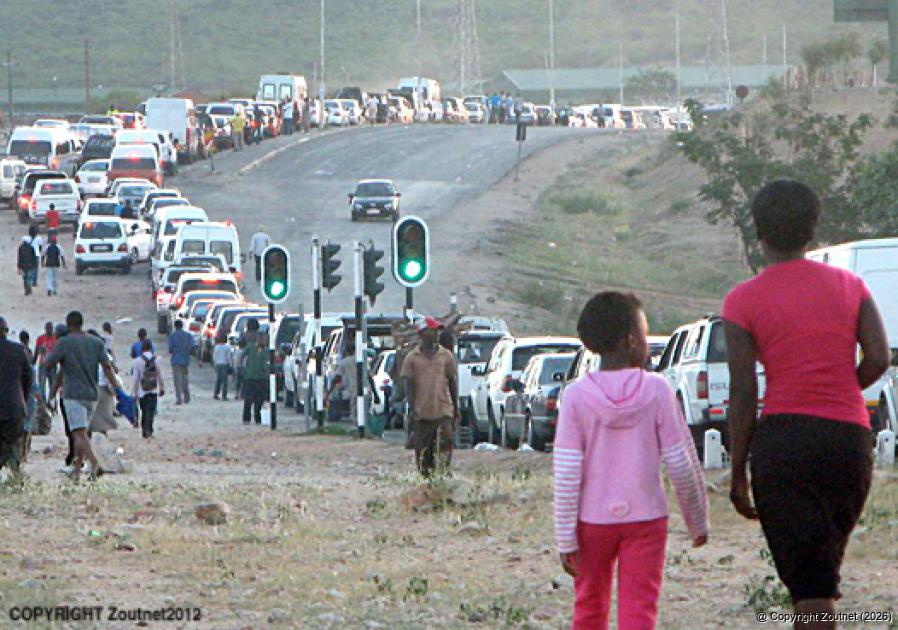
Meandering queues of cars on the road leading to the Beit Bridge border post were seen waiting for customs and immigration clearances on Friday. The long winding queues, which are usually a common sight during this time of the year,
stretched for about 5km as scores of Zimbabweans working in South Africa started flocking back, following the end of the festive season.
Chaos at border post as thousands return to SA
News Date: 11 January 2013
There was chaos at Beit Bridge Border Post between last Friday and Monday this week, resulting in a disruption in the smooth flow of traffic in the border town, following a sharp increase in the volume of traffic passing through the port of entry into South Africa.
Limpopo Mirror observed long winding queues of both heavy and light vehicles. Mostly South African-registered cars and buses lined up on the road leading to Beit Bridge border post on the Zimbabwean side and stretched for about 10km. Police, immigration officers and new Limpopo Bridge Company workers had a torrid time as they controlled the queues in an effort to reduce congestion at the busiest inland port of entry in sub-Saharan Africa.
The local assistant regional immigration manager in charge of Beit Bridge Border Post, Mr Charles Gwede, attributed the sudden increase in the volume of traffic to mounting pressure on the South African side, resulting in delays in the clearance of traffic entering the country. “We were forced to hold the cars up for several hours, largely because our South African counterparts are failing to absorb pressure on their side, resulting in the formation of long winding queues on our side,” he said.
He said most of the people started travelling on Wednesday, the majority of whom were Zimbabweans working in South Africa, flocking back to the country at the end of the festive season.
When Limpopo Mirror visited the border post, there were long queues of both human and vehicular traffic waiting to be cleared by customs and immigration officials on the departure side. Gwede said, however, that they were managing the situation. “I can safely say right now that everything is under control and our officers are efficiently managing the queues. We have also created separate immigration counters for buses as a way of easing congestion and ensuring a smooth movement of travellers,” he said.
Gwede said that as part of the decongestion drive they were working with the police to control the movement of traffic into the border area. He said on average they handled between 80 and 120 buses on either side during the extra high peak period. On the arrival side, it was less busy, with short queues and the volume of traffic had also gone down substantially, compared to the period during the run-up to Christmas.
Border Control Operation Coordinating Committee (BCOCC) spokesperson Mr Patrick Moengs said that they were reviewing plans to address congestion at the border. "We want to ensure a smooth flow of traffic at the Beit Bridge border as it will be coming from the other side of the border. The situation is not unusual, however, because we know that every year at this time people will be coming back into the country, including those who will be going to look for jobs. We have increased staff and equipment to make sure that we manage the pressure," he said.
Moeng said they had processed 54 299 travellers between Saturday and Sunday.
Meanwhile, the Ministers of Home Affairs for Zimbabwe and South Africa, Mr Kembo Mohadi and Ms Naledi Pandor, also discussed the issue of congestion at the border post. Mohadi said: “I talked to Minister Pandor over the issue of delays and congestion at the Beit Bridge Border Post and she promised to engage the Home Affairs director general, so that they deploy more personnel as well as create more mobile makeshift offices at their side of the border to help speed up the clearance of travellers,” he said.
Written by
Mashudu Netsianda
Mashudu Netsianda is our correspondent in Beit Bridge, Zimbabwe. He joined us in 2006, writing both local and international stories. He had worked for several Zimbabwean publications, as well as the Times of Swaziland. Mashudu received his training at the School of Mass Communication in Harare.

ADVERTISEMENT: