

ADVERTISEMENT:
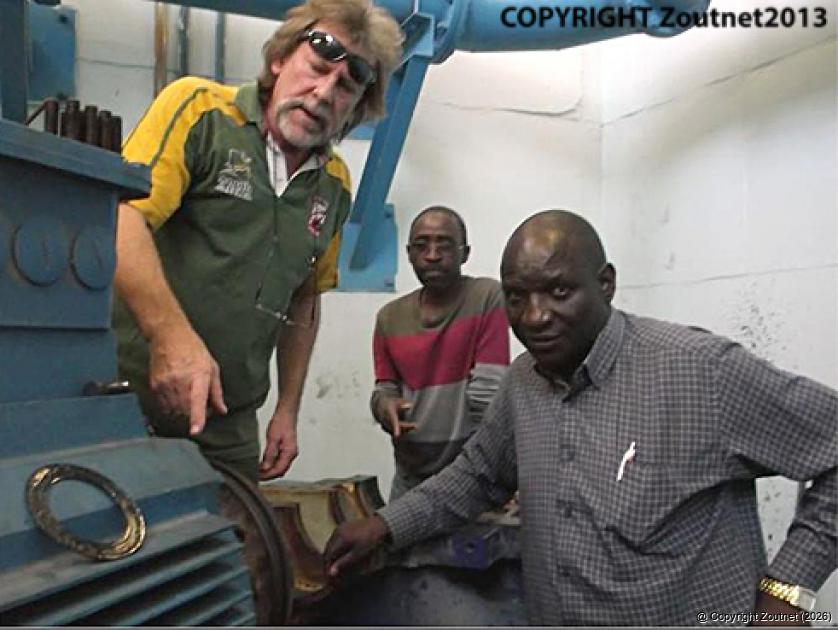
While the water supply of the whole region was interrupted by a strike on the part of water scheme workers, the new pump at the Albasinidam also needed reparation on 3 October. Pictured are Mr Wally Schultz (left), chairperson of AfriForum Louis Trichardt, and Mr David Mukosi (right) Vhembe´s water services manager of Makhado. Photo supplied.
Illegal strike by VDM workers reason for water shortages
News Date: 18 October 2013
The fragile water supply situation in the region is balanced on a knife’s edge.
The current water crisis, caused by an illegal strike by Vhembe District Municipality (VDM) workers, affected the whole of the Vhembe district. Though the workers from the water department had resumed work on Tuesday, it is rumoured that there would be yet another mass meeting to discuss issues.
Water supply to the villages of Vondo, Nandoni, Xikundu, Nzhelele and Mutale, among others, was hardest hit. Water tankers were reported to queue at the Nandonidam. At the University of Venda, students, lecturers and staff all suffered and the university had to bring in portable toilets. Drinking water had to be purchased for the residences, the cafeteria and the staff. “We sincerely apologize for the inconvenience caused by the latest water crisis,” wrote Dr Jannie Zaaiman, Univen’s deputy vice-chancellor (operations), in an email dated 14 October. He added that VDM’s municipal manager, Mr Masala Makumule, had informed him that morning that they had started pumping water into the reservoir.
Some residents of Makhado (Louis Trichardt) reported water supply interruptions over the last two weeks. An aged resident, Ms Elma van Niekerk, said that her sister from Australia was visiting South Africa and she had to tell her sister that she could not come and visit because she could not expect her visitors to carry water to the toilets and not take a bath.
But why the strike?
The Department of Water Affairs (DWA) transferred more than 1000 workers to the VDM in 2009. They demand salary parity between DWA-transferred staff and workers in the municipality. “It is important to note that the department has facilitated the transfer of the workers by giving adequate support to the municipality and subsidizing the entire operation for a period of three years, following the transfer. The subsidies included salaries, operation and maintenance of the water schemes and refurbishment,” states the DWA in an unsigned media release dated 15 October. The DWA further states that, in their opinion, the support they gave and continue to give to the municipality was sufficient to facilitate the settlement of all outstanding staff-related matters, including the issue of salary parity.
The VDM’s spokesperson, Mr Matodzi Ralushai, said that the strike started on 1 October and that the VDM management, DWA and Nehawu’s representatives were engaging in dialogue. “They met formally on Monday and most of them have returned to work today. We hope the situation will return to normal,” Ralushai said on Tuesday and added that the strike was not violent, but “very effective”. That is due to the fact that they had turned the water off in most areas, an action condemned by the DWA, who wished “to make it clear that the deliberate shut-off of water to communities by protesting workers is unacceptable and will not be tolerated.” The DWA did not expand on the action they would take if workers continued to shut down water deliberately. Meanwhile, Minister Edna Molewa will establish a high-level task team to find a speedy resolution to the matter.
“The workers returned to vital areas like the pump station at the Albasini Dam. The water shortage in Makhado (Louis Trichardt) was not so much due to the strike as to the new pump at the Albasini plant that broke on 3 October and had to be fixed. The two small standby pumps were straining to deliver enough water. On top of the strike, only three out of the 14 old boreholes (west of town) are working and the four new ones are idle at the moment,” said AfriForum chairperson Mr Wally Schultz.
“Well, one week it is the pump, the next week a strike and who knows what the excuse will be next week,” said Mr Gert van der Westhuizen, owner of Madi Gra Water in Makhado (Louis Trichardt). Although he sells drinking water in his shop, Van der Westhuizen ironically has to deliver water for other purposes to his business premises about every single day. “I am used to the fact that I do not have municipal water and I have bought a bakkie with a tank on it and have organized to have water delivered to my premises daily. At first I phoned often to find out why there is no water, but that only serves to shorten my life. Now I accept that water supply cannot take place,” he said.
Written by
Linda van der Westhuizen
Linda van der Westhuizen has been with Zoutnet since 2001. She has a heart for God, people and their stories. Linda believes that every person is unique and has a special story to tell. It follows logically that human interest stories is her speciality. Linda finds working with people and their leaders in the economic, educational, spiritual and political arena very rewarding. “I have a special interest in what God is doing in our town, province and nation and what He wants us to become,” says Linda.

ADVERTISEMENT: