

ADVERTISEMENT:
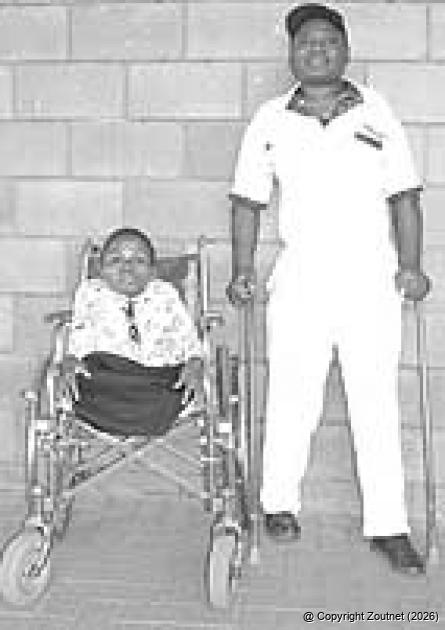
Avhahumi Masindi and Humbulani Nengovhela decided to put their disabilities aside to work for the development of the community.
“We are differently able…”
News Date: 18 March 2005
MILUWANI – After realizing that the majority of disabled people are abused and looked down upon, two courageous disabled people decided to initiate an institution which fights for the rights of the disabled.
Humbulani Nengovhela (33) and Avhahumi Masindi (35), who could not find employment after completing their studies, established the Disabled Development Advisors which voices the problems of the disabled and finds possible solutions with relevant stakeholders. Nengovhela holds a Teacher’s Diploma from the erstwhile Venda College of Education, whereas Masindi graduated with a Diploma in Computer Practice from the Boston Business College.
Mirror visited the two community builders at their rented office at Sibasa’s Noor Centre building, to find out the secrets behind their achievements. “We have been struggling to get employment for a long time without success and we decided to start something that will benefit fellow disabled people. We have also learnt that many companies are reluctant to employ critically disabled people and we guess that was the reason why it was difficult for us to get employment. But we are happy that people are now recognizing our work and they now treat us as other normal human beings. We want to send a clear message to the community that we are useful and we can contribute in the development of the society. We cannot just sit and wait for our disability grant without contributing to the development of our community. It is our physical appearance that is affected by disability, but our minds are razor sharp and we can also do something that those without disability cannot achieve. We are not useless, but we are differently able,” said Nengovhela, who walks on crutches as a result of permanently non-functional legs.
Masindi, who is wheelchair bound because her legs are totally deformed, explains how her joint venture with Nengovhela works: “We strive to develop a close working relationship with fellow disabled people. We encourage them and guide them to start their own projects to generate funds. We also advise them how to use their disability grants profitably. We also teach them about the importance of their basic human rights so that they may enjoy life like other people. Our job is more field work than office bound because we have to meet other critically disabled people at their homes.”
The two say that, although they enjoy working with fellow disabled people, there are some problems they encounter during their day-to-day activities.
“We do not have transport of our own and this slows down progress in our work. Most of the buildings in the local towns and villages are not accessible, as the disabled were not involved in their planning. This makes it difficult for us to reach all our destinations and it has a negative impact on our duties. We always have conflicts with parents or relatives who are using their relatives’ grants for personal gain. We insist that the money should be used to uplift the lives of the bene-ficiaries and we fall out of favour with those who are abusing the funds for the disabled. If we see that the problem is persisting, we contact either the police or the social development department,” said Nengovhela.
Asked how they generate income for their office because most of their services to the disabled are free, Masindi said:
“We do basic bookkeeping and auditing to members of the community to earn some extra cash and to run errands in the office. We also assist community members with their business plans and registration and how they can run and sustain their projects effectively.”
She concluded by urging other disabled people to work hard for their own development. “The days of begging on street corners are over and we have to show the world that we are able to achieve more in life despite our physical disabilities. We are capable of success but it only depends on our attitudes.”
Written by
Wilson Dzebu

ADVERTISEMENT: