

ADVERTISEMENT:
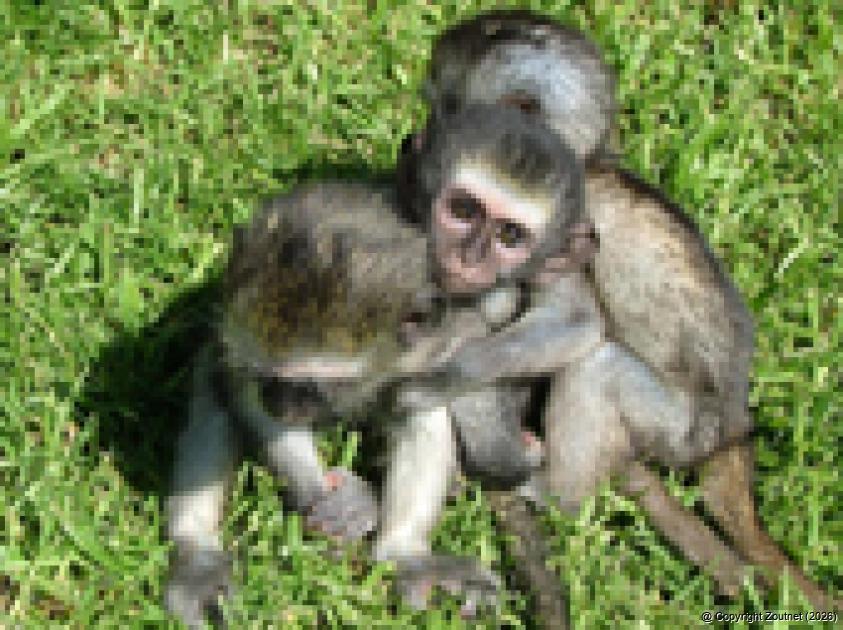
Injured and orphaned monkeys take about three years before they will be wild enough to be released back into the wild.
Vermin now protected species
News Date: 27 May 2005
MAKHADO (LOUIS TRICHARDT) – The days of killing are over! This statement refers to the vervet monkeys who are now a protected species.
Farmers who attended a farmers’ union meeting at the Bergwater Hotel on May 10 learnt that vervet monkeys are no longer classified as “vermin” in the Limpopo and that, under the Biodiversity Act for South Africa, the vervet monkey is in fact a protected species. It is also protected under the Convention for the Trade in Endangered Species (CITES).
Well-known primatologist and founder of the Vervet Monkey Foundation, Arthur Hunt, was invited as a speaker at the farmers meeting. Hunt pointed out that all wildlife is protected under the constitution of South Africa. He said that no provision is made in the constitution for any person, including farmers, to kill any of South Africa’s wild heritage.
“Farmers or landowners are now compelled by law to obtain a permit before they can kill a vervet monkey,” Mr Arthur Hunt said. He told the meeting that the agricultural sector that undertakes to do agriculture in natural areas does not have the right to kill wild animals that come onto their property.
It was also mentioned that under the trade agreements between the Europe Union and farmers in the area, it meant that farmers now had to farm in a way that is environmentally friendly.
“Farmers who kill wildlife jeopardise these trade agreements and it is an easy matter to get a boycott on fruit that has been spoiled with the blood of a primate species,” Hunt said.
Farmers at the meeting requested that the Vervet Monkey Foundation undertake to do a study about the relationship between vervet monkeys and the macadamia nut and to measure the damage that vervets cause to macadamia nut production. Hunt agreed to come out and study this phenomenon.
This followed after Hunt shared his extensive research on alleged damage caused by vervet monkeys.
“I worked in the agricultural industry and in my 14-year study of the pollinating processes in monoculture orchards, I never saw a monkey in any of the orchards I was studying. On the farm I lived we had a banana plantation and an orchard of litchi and one of avocado; the farm was also situated in George’s Valley and it is in a green belt area, similar to Louis Trichardt.
“When I started to rescue vervets and found out that farmers were shooting these monkeys because of the crop damages that they were experiencing, I wanted to see what this damage was and I contacted the department of Nature Conservation to refer complaints to me so that I could do an investigation. After doing 56 investigations, I can conclude that farmers could not show me the damage that they claimed,” Hunt said.
Mr Hunt gave the meeting some insight into the research that he had been doing into the reasons why vervet monkeys are indiscriminately shot or poisoned by farmers. He discovered that many of the farmers who shot or poisoned monkeys were taught to do this by their fathers and grandfathers. Crops get minimal damage and this does not warrant the killing of the vervet monkey. The members present agreed that not all farmers experience this damage and that not all farmers shoot or kill vervets.
The meeting also said that poisoning vervet monkeys was not an option, whereupon Hunt told the meeting that it is a punishable offence to poison a wild animal. Hunt concluded that farmers would have to change their mindset, especially farmers who farm in the very sensitive and natural areas of the Limpopo Province. In the new laws of the country, more value is placed on the protection of wildlife and every citizen has a ‘duty of care,’ a responsibility towards protecting the natural heritage.
The Vervet Monkey Foundation is situated in Tzaneen and Hunt can be phoned at Tel (015) 304 3484 or contacted via e-mail at [email protected]
Written by
Linda van der Westhuizen
Linda van der Westhuizen has been with Zoutnet since 2001. She has a heart for God, people and their stories. Linda believes that every person is unique and has a special story to tell. It follows logically that human interest stories is her speciality. Linda finds working with people and their leaders in the economic, educational, spiritual and political arena very rewarding. “I have a special interest in what God is doing in our town, province and nation and what He wants us to become,” says Linda.

ADVERTISEMENT: