

ADVERTISEMENT:
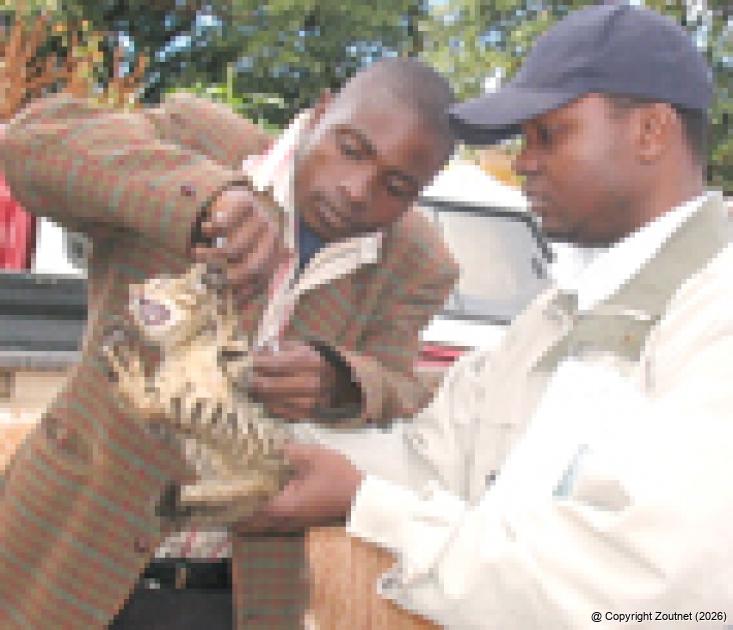
Animal health officers busy vaccinating a kitten at Vhurivhuri Village last Friday.
Rabies outbreak causes concern at rural villages
News Date: 16 June 2006
“The outbreak of rabies in Limpopo has already claimed twenty-six people,” said the provincial health promotion manager, Mr Elias Mugari, during the vaccination of pets at Vhurivhuri Village in the Vhembe District on Friday.
According to Mugari, deaths as a result of rabies have been reported in all districts in the Limpopo Province. Mugari further said rabies is a contagious and deadly viral disease, causing damage to the brain and the spinal cord. He said it affects both humans and animals, and it result in death once disease symptoms develop. “The rabies virus is found in the saliva and nerve tissue of infected animals. It is transmitted to humans and other animals through contact with saliva or tissue of infected animals. Its symptoms may occur as early as one week and as late as several years after contact with infected animals. Once symptoms of the disease develop, rabies becomes fatal to both humans and animals. Seek treatment immediately. Do not wait for symptoms to develop,” he said.
A veterinarian, Dr Rhangani Tambudzani, said symptoms of rabies are headache and fever, irritability, restlessness and anxiety, muscle pains, malaise and hydrophobia, vomiting, hoarse voice, paralysis, mental disorder, profuse salivation and difficult swallowing. “If you have been bitten or had contact with a dog or stray animal that are behaving strangely, wash the wound with clean water and soap immediately for at least ten minutes, apply antiseptic ethanol or iodine and consult a doctor or clinic immediately. You can contact the nearest state veterinarian or animal clinic,” Tambudzani ads.
Another veterinarian, Dr Vonani Mashau, said rabies infects domestic animals when fighting with infected stray pets. “People must make sure their dogs and cats are vaccinated regularly. Even a day-old pet must be vaccinated. Do not allow pets to roam the streets. Animals suspected to be suffering from rabies must never be handled under any circumstances. Report all suspected rabid animals to your nearest state veterinarian, animal health technicians or to the police,” he added.
Written by
Godfrey Mandiwana

ADVERTISEMENT: