

ADVERTISEMENT:
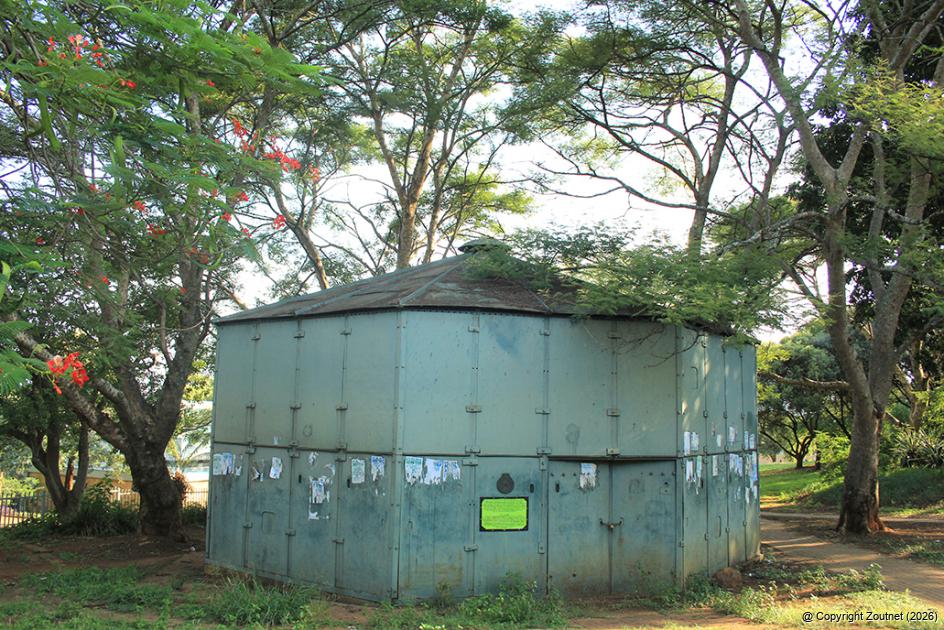
Fort Hendrina, a grade II provincial heritage site, is believed to be the only extant iron fort that remains in South Africa.
HMP lists Fort Hendrina as most endangered
News Date: 16 December 2017
The historical Fort Hendrina in Louis Trichardt was last week listed by the Heritage Monitoring Project (HMP) as one of the country’s top ten most endangered cultural heritage sites.
The Most Endangered Cultural Heritage Sites campaign is an annual initiative of the HMP to identify and raise awareness of cultural heritage sites that are at significant risk from natural or human made forces. The campaign is an attempt to raise public awareness of the incredible courage and dedication of individuals and local organisations fighting uncaring administrations and land owners, developers, powerful international and local mining interests and natural forces as they try to save the country’s heritage. “More importantly, we aim to provide a platform for heritage activists to share with the public their vision for at-risk sites and how communities can assist in overcoming these risks,” said HMP co-founder, Mr Jacques Stoltz.
Fort Hendrina, a grade II provincial heritage site, is believed to be the only extant iron fort that remains in South Africa. These forts were designed in 1887 by Captain Adolph Zbořil, an Austrian, who became the second highest ranking officer in the Transvaal State Artillery. The forts were made from heavy armour plates and could be dismantled and reassembled elsewhere in the field. It is estimated that about 20 to 25 soldiers could be accommodated in a single structure. Fort Hendrina was used in various military campaigns before, during and after the South African Anglo-Boer War (1899 – 1902).
Why is this fort endangered?
According to the HMP, the Makhado Municipality is the custodian. “Activists claim that the fort has all but been abandoned by the municipality and it is now victim to neglect, vandalism and in urgent need of restoration,” said Stoltz in the press release. The Louis Trichardt “Erfeniskomitee” is the local champion fighting for the preservation of the fort.
This year was the second time that the HMP issued a call to the public to nominate sites of concern. In total, more than 35 heritage sites across a range of categories were submitted. The nominations include historic buildings and structures, cemeteries, sites of conflict, museums, mills, memorials, a mission station, a fortification, a cultural park and even a jetty.
The overwhelming public response to the call for nominations continues to show that South Africans are deeply concerned about the state of their cultural heritage.
According to the HMP, most of the sites share common threats yet again, such as a lack of maintenance, lack of funding or other resources, mining, development pressure, lack of development and investment, gentrification or, simply, official neglect. “Each year’s nominations provide an opportunity to also respond to emerging themes or trends, often a particular site tells us about what may be happening at a wider regional or national level that requires urgent attention,” said Stoltz. He noted that the HMP and the judges are acutely aware that some heritage communities and activists are more privileged than others in having access to the necessary resources to prepare nominations – and more importantly, to organise locally. “However, by running the campaign annually, we hope that the list will become ever more inclusive and representative of the rich variety of heritages our country is home to,” said Stoltz.
The other sites that made the top ten most endangered list included the Bo-Kaap area in Cape Town, the Botshabelo Mission Station in Mpumalanga, the Children’s Memorial Institute (Old Nurses’ Residence) in Johannesburg, the Goudkoppie Heritage Hill in North-West, the Jan Smuts House Museum in Irene (Gauteng), railway stations and associated structures of South Africa, Tragedy Hill at Port Edward in KwaZulu-Natal, the Village of Bathurst in the Eastern Cape and the Xolobeni Red Dunes (Wild Coast) in Eastern Cape.
Written by
Andries van Zyl
Andries joined the Zoutpansberger and Limpopo Mirror in April 1993 as a darkroom assistant. Within a couple of months he moved over to the production side of the newspaper and eventually doubled as a reporter. In 1995 he left the newspaper group and travelled overseas for a couple of months. In 1996, Andries rejoined the Zoutpansberger as a reporter. In August 2002, he was appointed as News Editor of the Zoutpansberger, a position he holds until today.

ADVERTISEMENT: