

ADVERTISEMENT:
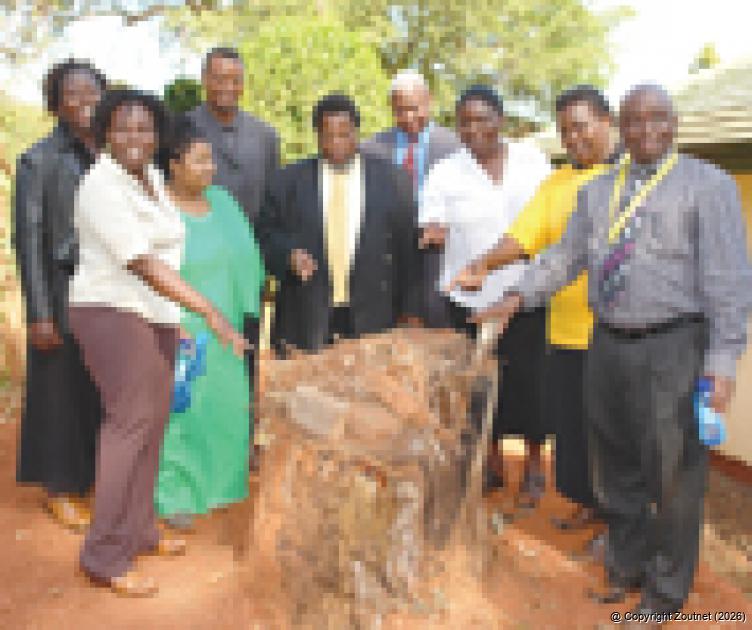
Dr Tshenuwani Farisani (center), Mayor Thivhulawi Makumbane (fourth from right), the Chief Director of the Department of Water Affairs and Forestry, Alson Matukane (far right), and other dignitaries pictured next to the stump of one of the invasive alien plants destroyed at Maungani village.
"Conserve the environment"
News Date: 13 October 2006
The Speaker of the Limpopo Legislature, Dr Tshenuwani Farisani, and the Mayor of Thulamela Municipality, Khosi Thivhulawi Makumbane, jointly urged community members to work with the government and different community structures in conserving the environment and removing invasive alien plants.
They were the keynote speakers during the official launch of the annual Weedbuster Week Celebration held at Maungani Sports Ground, near Thohoyandou, on Monday.
Invasive alien plants are plants that have been brought to South Africa from other countries for their beauty, economic value or ecological purpose. Some are brought in unintentionally and they end up reproducing and spreading prolifically. These invader plants and seeds spread rapidly and compete for the growing space of our own indigenous plants. Invasive plants threaten the indigenous vegetation as they utilize up valuable and limited water resources. Most of them consume more water than the indigenous plants and are depleting the valuable underground water resources. Invasive species are causing billions of rands damage to South African economy every year, and are the single biggest threat to our exceptional variety of plants and animals.
The fight against invasive alien plants is spearheaded by the Working for Water Programme, launched in 1995 and administered through the Department of Water Affairs and Forestry. This programme works in partnership with local communities, to whom it provides jobs, and also with government departments, including the Departments of Environmental Affairs and Tourism, Trade and Industry, provincial departments of Agriculture, conservation and environment, research foundations and private companies. During the 2003/4 financial year, the Working for Water programme completed 194 440 hectares of initial clearing of invasive alien plants and 598 135 hectares of follow-up clearing, employing 33 000 people from among the marginalized sectors of the society. Of these, 52% are women. Working for Water currently runs over 300 projects in all nine South African provinces.
During the function, Dr Farisani says the government has introduced various ways of busting dangerous plants and urged the community to be involved in the fight against these plants. He also warned community members to refrain from burning forests, while encouraging them to plant more indigenous plants. Farisani added: “When you cut down indigenous trees, you are automatically inviting drought. I have personally planted more than 60 trees and I urge you to follow suit because it builds up our environment. We must come together to fight these dangerous plants that are destroying our environment. Education and awareness of the importance of the prevention of the spread of invasive plants are critical elements of this war against destructive plants.”
The mayor of Thulamela Municipality, Khosi Thivhulawi Makumbane, urged traditional healers to develop indigenous plantations to preserve plants that they use for medication. “As a responsible municipality, we will work with different stakeholders to make sure that our environment is conserved because good environmental conservation enhances tourism.”
Written by
Wilson Dzebu

ADVERTISEMENT: