

ADVERTISEMENT:
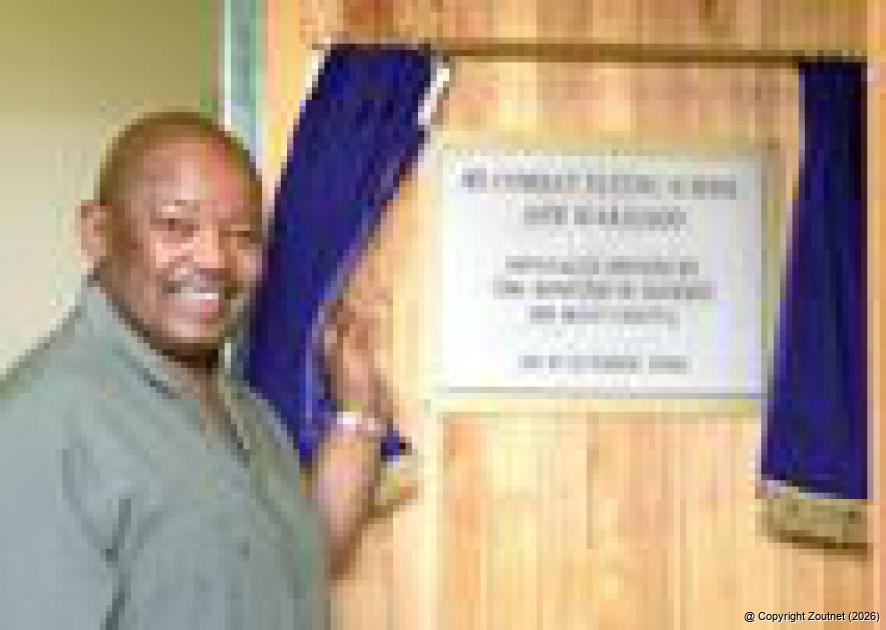
South African Minister of Defence Minister Mosiuo Lekota officially opened 85 Combat Flying School on Thursday, October 19. The combat flying school was relocated from Hoedspruit to Makhado (Louis Tri-chardt).
85 Combat Flying School relocated to AFB Makhado
News Date: 27 October 2006
Some of the South-African Air Force’s top brass, including the Minister of Defence, Mosiuoa Lekota, attended the opening of 85 Combat Flying School at AFB Makhado on Thursday October 19. The event also saw the unveiling of the air force’s 24 new Hawk fighter and training aircraft.
Formerly from Hoedspruit, 85 Combat Flying School was relocated to AFB Makhado where the South African Air Force’s new Hawk fighter and training aircraft will be based. The Hawks replaced the phased-out Impala aircraft in late 2005 with the first two Hawks arriving at AFB Makhado on May 24 this year.
AFB Makhado is at present already home to 10 new Hawks. The remaining 14 planes will be handed to the SAAF by 2008.
During last week’s function, Minister Lekota said that the opening of 85 Flying School and the symbolic acceptance of the Hawks are more milestones in the renewal and upgrading of the country’s strategic defence equipment. He added to this by saying that the ongoing renewal of the country’s defence capability is ensuring that the country is prepared, in the immediate and long term, to defend and secure the territory of South Africa. This, Lekota said, includes South Africa’s coastal waters and air space.
Lekota said the Hawk Mk 120 will be the first fighter and training aircraft on which the current generation of young air combat pilots, navigators and technicians will receive their training. He added that training and development programmes in support of the Hawk are well underway and that 19 aircrew and 36 groundcrew will be trained at the end of this year.
The Hawk pilots will also undergo low risk environment training which will include tasks such as search and rescue, communications, border patrol, reconnaissance and limited close-air support. The implementation programme of the Hawk-training is well underway and most of the necessary facilities are already in place. Steady state operations will have been achieved upon receiving the remaining aircraft. Thereafter, the hawk is expected to remain in service with the SAAF for at least 30 years and in all likelihood closer to 40 years.
Written by
Riaan de Swardt

ADVERTISEMENT: