

ADVERTISEMENT:
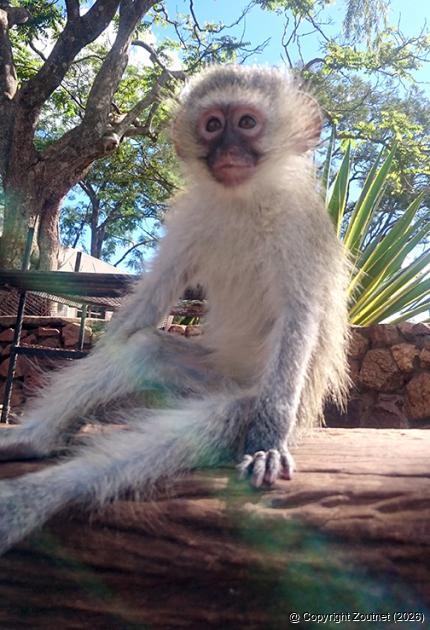
Urbanised monkeys continue to be a bone of contention. What can we do to curb monkey invasions of our homes? Photo: Melony Coetzee.
Pet or pest?
News Date: 02 July 2018
When it comes to animals behaving badly in places where humans think they should not be, opinions about what should be done with them usually differ.
From feral cats decimating bird populations, to species of released pet snakes swallowing more fragile indigenous creatures, different factions will always be supporting the cats and snakes rather than the birds and legitimate wildlife, even though these problems are clearly man-made and hugely detrimental to ecosystems.
As far as marauding monkeys are concerned, tempers can rise more than usual, and some people insist that shooting them on sight whenever they encroach on human property is the only way to stop them. Others will fight for them to be respected and protected and not harmed, no matter how much damage they cause. Unfortunately, things can often get to the point where the different sides refuse to even hear each other out - a situation that is not going to help in finding a lasting solution to a very annoying problem.
Monkeys have been a nuisance here and in other towns in South Africa for a very long time. The problem is not just their entering houses and helping themselves to whatever food they happen to be able to lay their hands on; instances where monkeys have injured people and pets have also occurred. They have killed dogs that were trying to chase them away. While it is true that they are destructive, cheeky thieves and very dangerous in some circumstances, like any other wild creature, they have no idea why their foraging makes humans so very angry with them.
Even though they are such extreme irritations to us, most people would not like to see them suffer as they do when they are injured by pellets or other missiles thrown to keep them away from personal property. When it comes to using larger weapons in areas inhabited by many people, we would be opening up much more terrifying possibilities, quite apart from the legalities involved. On at least one occasion in this country, a young child was mistaken for a monkey when he climbed a tree to pick some fruit and was shot dead. Unfortunately, no matter which side of the fence one is on as far as the monkey problem is concerned, any solution will probably not be a simple one or happen overnight.
While Ms Melony Coetzee of Louis Trichardt is the first port of call for many local monkeys in trouble - and she helps them as best she can, at her own expense - she agrees that these primates do indeed cause problems that need solutions.
“The problems have been created by us,” she said. “Let’s stop trying to pass the buck to Nature Conservation and other foundations. Get involved. Get together. Do something to help yourselves and them.”
Apart from the fact that much of the Vervet monkey’s historical territories have been taken over by people for agricultural and residential use, which causes them to have to range wider in search of food, a lot of the urbanisation of monkeys has more direct causes. Some people like to have baby monkeys as pets. They are cute and unique when they are small. They can be dressed up like little humans, and they are intelligent and affectionate infants. Unfortunately, these little sweeties grow up to become … monkeys.
“Monkeys bite,” said Melony. “It’s a natural behaviour for them in the wild in various situations. Sooner or later you’re going to get bitten when you have a monkey for a pet.”
In almost all cases, said Melony, people then let them loose in the wild, assuming that they will be taken in by a wild troop. This is not the case, explained Melony, adding that just as one is unlikely to welcome a random stranger wandering into one’s home and staying, monkeys do not like it either. They will often kill lone individuals encroaching on their territory.
According to Melony, monkeys that have previously been pets will stay in town as they know their way around houses, and they are not intimidated by humans. If they form troops of their own with other wanderers, they will teach them the same things. Many people who originally think it is wonderful to have all sorts of critters visiting their gardens also feed the town troops on purpose. They encourage them to come closer until they come to the unhappy realisation that the monkeys are not simply going to drape themselves ornamentally around and politely wait for snacks. By then, it is too late. Monkeys are quick learners.
“They’re not overly afraid of humans any more, and a particularly large and aggressive troop is not likely to be afraid of large dogs or much else other than guns. While it’s understandable that there are many people trying to protect them from dying painful and drawn-out deaths, following injuries from pellet guns, we must also not disregard the danger they can pose, especially if they feel threatened. Apart from their being particularly aggressive when they feel cornered, they are also dangerous to small, unattended children when they are eating something,” said Melony.
Melony suggests that, rather than wait for the authorities or others to fix our monkey problems, because it is unlikely that they can, people should try and be as proactive as they can in dealing with this “nuisance” with as little harm as possible to all parties—including the monkey invaders. “We should approach this issue with logic rather than with anger and emotion. Monkeys are just as much a part of the world as we are. They are important to ecosystems in the wild, so rather than try and eradicate them, let’s try and find ways to co-exist. Consider the reasons for their being on your property. Firstly, they’re foraging for food, and secondly your property could appear to them as simply part of their territory. If they consistently find nothing easily accessible to eat in your garden or house, they are likely to move on to other places where they know that they’re much more likely to find something,” she said.
Melony said that apart from the usual tips to keep them at bay like having screens on open windows, or otherwise closing them when nobody is home, one must not leave food near open windows. “Don’t leave food outside. Make sure that your rubbish bin is properly closed. Where everyone could work together would be by trying to address the problems created for monkeys and other wild animals by human encroachment onto their habitats. Make food accessible to them by designating stations back in the forests where we can drop off our ‘waste’ fruits and vegetables, while at the same time ensuring that it’s not easy for them to find anything to eat in the suburbs,” said Melony.
According to Melony, no animal deserves to have cruelty inflicted on it for simply going about its business of living, though, so no matter how irritated people become with these pesky little guys, people should refrain from hurting them for no reason. “Chase them away with loud noises or hosepipes rather than shooting pellets directly at them. These don’t kill them outright and can lead to quite a lot of suffering and pain when these wounds get infected before death occurs,” said Melony. She suggested that the time might be ripe for people to come together and think of viable, sustainable, and kind solutions to end troublesome monkey invasions.
Written by
Jo Robinson
Jo joined the Zoutpansberger and Limpopo Mirror in 2018 pursuing a career in journalism after many years of writing fiction and non-fiction for other sectors.

ADVERTISEMENT: