

ADVERTISEMENT:
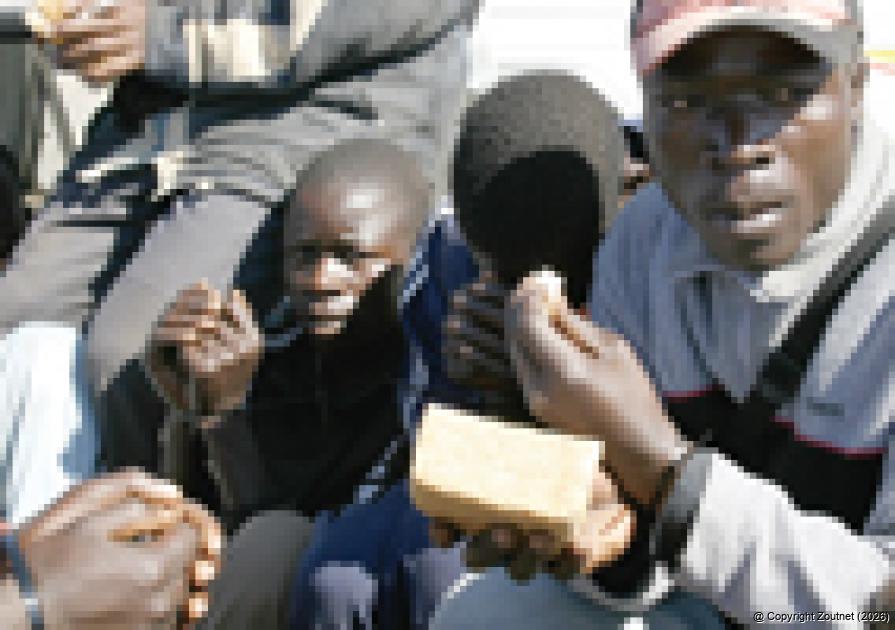
International television and news crews had the opportunity last week to experience first-hand the escalating crisis in Zimbabwe and witness the mass influx of “illegal immigrants” fleeing from their country to find shelter in South Africa. As members of the TAU SA’s farm watch rounded up border jumpers, the cameras were ready to capture images of the human tragedy. The youngest member of this group, captured at Bokmakierie on Friday, July 20, was a mere 15 years old. He too tried to escape his country of birth in search of food and safety.
Eyes of the world focus on Zimbabwean border crisis
News Date: 27 July 2007
South Africa’s failure to protect its own citizens and northern borders is witnessed with shock and increasing disbelief by high-profile local and international observers.
Members of the international media, representing countries around the world, together with a parliamentarian delegation, have converged on the Beitbridge and Musina area of the Limpopo Province since last weekend, to observe at close quarters the growing mass-exodus in what is considered to be the buildup towards the final meltdown in Zimbabwe. The consensus of opinion amongst these observers is that the situation can be considered to be fraught with explosive, negative consequences, which can only be partially averted or successfully managed by a dramatic change of official attitudes and action in South Africa.
In private conversations, President Mbeki’s "quiet diplomacy" is increasingly equated to "silent approval". His official statement that South Africans (especially those along the border) should simply "learn to live with" the situation, as well as Foreign Affairs spokespeople’s statements about the "impossibility" of exercising efficient border control, is greeted by disbelief and is the subject of renewed severe critical scrutiny of South Africa’s stance.
Critical international media attention was turning from Zimbabwe to South Africa this week for the first time and was focused on what is described as "the unbelievable situation" along the South African border with Zimbabwe. Observers witnessed the uninterrupted stream of thousands of Zimbabweans informally crossing the Limpopo River on a daily basis. There is also a marked increase in those arriving formally through the Beitbridge Border Post. The absence of effective measures or facilities on the South African side to either halt or assist the flood of desperate Zimbabweans, was greeted with total disbelief by several foreign media correspondents.
A fact-finding delegation of DA parliamentarians who visited the border this week confirmed a "dramatic increase in refugees" and stated bluntly: "Zimbabwean lawlessness is moving south, across the border, as the South African Police Service lose control." They say instead of fighting crime, the SAPS is wasting time chasing, rounding up and returning "illegal immigrants", who are generally coming across the border to get a meal, shelter and safety.
The latest surge of international media attention was mainly sparked by a British tour operator whose clients ran into several numbers of Zimbabwean intruders during a hunting expedition on a game farm in the Northern Limpopo. The visiting hunters had to carry out a citizen’s arrest to enable the SAPS to remove the intruders.
The chairperson of the TAU SA’s committee on security, and chairperson of the Soutpansberg Regional Agricultural union, Mr Gideon Meiring, says the South African Government’s responsibility to guard the country’s border and to protect its citizens is being shifted onto the shoulders of private citizens, and especially the agricultural community along the South African border with Zimbabwe.
"This totally irresponsible dereliction of duty by the government and its security forces creates unnecessary tension because it brings the flood of Zimbabweans on a direct collision course with the farming community who, at their own expense, have to protect their families, possessions and important, life-sustaining economical activity."
Thousands of Zimbabweans, desperately dashing across the Limpopo to escape the life-threatening situation in their own country, cause severe damage and disruption on border farms, while they are officially regarded as illegal immigrants. Many of them are rounded up by farm owners and handed to the police.
"With effective border control by government security forces, this situation could have been avoided," says Meiring.
Meiring, who is a commercial farmer, spends much of his time being interviewed by members of the local and international media. During the past weeks, he had interviews with various local radio and television presenters as well as journalists writing for local and national newspapers and magazines, reporters from Namibia, Germany, the UK (BBC radio and television), Associated Press, AL Jazeera’s English channel, the London Daily Telegraph and Sky News. Amongst the line-up of interviews for next week is NBC-TV from the USA.
Asked about the reason for the involvement of international media in the situation in Northern Limpopo, Meiring said the success of reconciliation and democracy in South Africa, and the country’s success as a respected member of the international society, depends on its ability to fight and eradicate crime successfully, as far as possible. He said almost a decade of concerted efforts on all levels to get the attention of the South African government focussed on the area’s needs and the escalating problems of crime, resulting from the unacceptable lack of efficient border control, and abuse of official power, proved to be a futile exercise. The farming and other local communities’ positive and very productive response to official requests for assistance in the fight against escalating crime, Meiring says, is unfortunately being met on all official levels in the Limpopo Province with petty interference and blatant efforts at intimidation by police officials who apparently feel frustrated by a scenario in which they cannot freely abuse their power and just do as they please.
Written by
Frans van der Merwe
Frans van der Merwe is a freelance journalist with more than 40 years experience in the newspaper industry. Apart from newspaper reporting, he was also involved with radio news, news reading, training and marketing. He has been living and working in Louis Trichardt since 1991.

ADVERTISEMENT: