

ADVERTISEMENT:
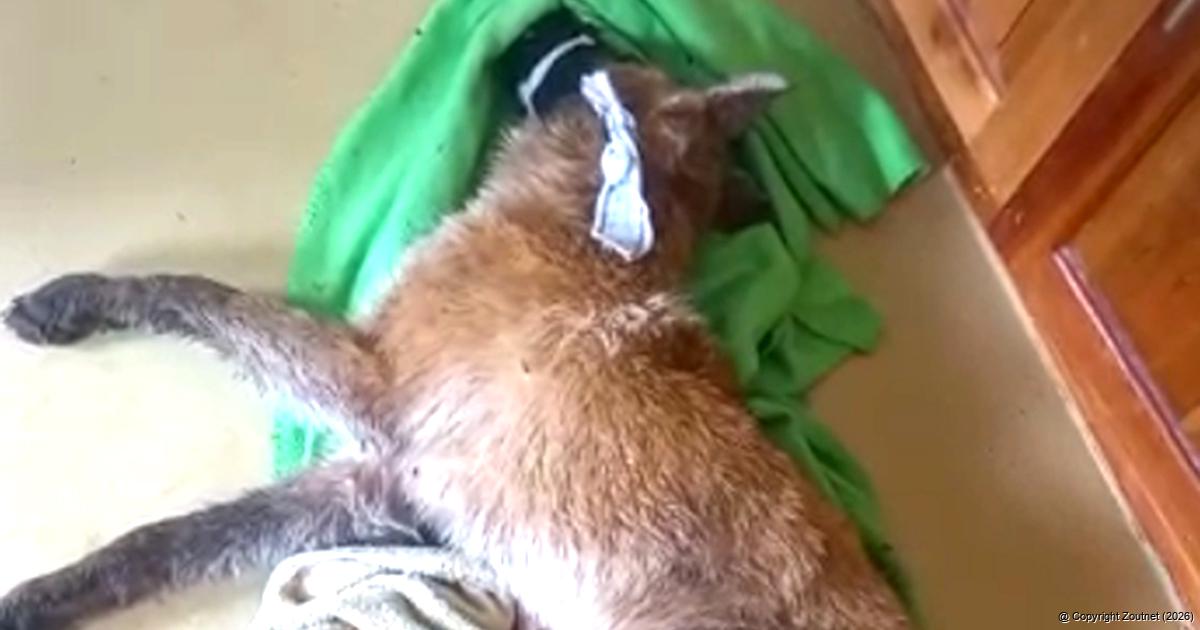
One of the dogs displaying definite symptoms of rabies that was brought to the Louis Trichardt SPCA the past month. In cases where dogs display symptoms of rabies, they have to be put down if proof of vaccination cannot be shown. Image supplied.
Deadly rabies outbreak warning
News Date: 23 September 2022
Residents of the Soutpansberg are faced with a serious outbreak of rabies at present and are urged to take the necessary preventative measures to ensure the safety of not only their pets, but their own lives.
“The situation is very bad. We have to classify it as an outbreak. In the case of rabies, we call one case an outbreak. At the moment, we are getting quite a few positives, so it is quite scary,” said Dr Ashley Heymans, who is currently doing her compulsory community service (CCS) year at the Makhado Veterinary Lab.
According to the National Institute for Communicable Diseases (NICD), rabies is a viral infection of the nervous system. “The disease is reported in different wild and domestic animal species, but most cases of rabies in South Africa involve domestic dogs. Human rabies cases are rare in South Africa, but cases are still confirmed annually. Humans are exposed to rabies through bites (and other wounds) inflicted by rabid animals,” states the NICD’s website. It goes on to explain that the virus is contained in the saliva of a rabid animal. “Most human rabies cases in South Africa are associated with domestic dog exposures. Although a fatal infection, rabies can be controlled through vaccination of domestic dogs (and cats) and the use of rabies post-exposure prophylaxis in exposed human cases,” states the NICD. The first post-exposure prophylaxis should be administered within 24 hours after a bite. If not, rabies is nearly 100% fatal once symptoms appear.
The past month, Heymans said on Wednesday, she had submitted between 10 and 15 cases for testing. Almost half of this number was of dogs of pet owners in Louis Trichardt. “The horrible thing is, if a dog comes to us, or any vet actually, and shows signs that it could be rabies, and the owner can’t prove that the dog was vaccinated, which often is the case, especially here in Louis Trichardt, we are obliged to put the animal down. This is because it is such a dangerous disease that we are not allowed to send the animal home,” said Heymans. This is even though testing has yet to confirm rabies. “They don’t all come back positive, but unfortunately the animals have to be put down to detect the disease. If they are not vaccinated, we don’t have a choice,” said Heymans.
Regarding the above, Alicia Thomas of the Louis Trichardt SPCA mentioned that they had recently had a pet owner bring in her dog with rabies symptoms. The encounter turned unpleasant when the woman refused to have her dog put down and demanded to take it home. “This is so dangerous! If that dog bites a child, that child [or any person for that matter] could die,” said Heymans, adding that many people still did not realise the seriousness of the disease.
But why the sudden spike in rabies cases? Heymans said the occurrence of rabies was not necessarily seasonal, but it did go in a little bit of a cycle because of the wildlife affected by it. One year would have more wildlife cases than other years. “But, at the moment, it is so bad because the vaccinations rate is so low. Unfortunately, that [vaccination] is really the only thing you can do to prevent the spread of the disease,” said Heymans.
The low vaccination rate definitely contributes to the spread of the disease, but where does it come from? Over the last couple of weeks, several unconfirmed reports reached the Zoutpansberger of pets, and even children, apparently being “attacked” by vervet monkeys in Louis Trichardt. Some wonder if these vervet monkeys could be the cause. Others speculate that the local mongoose population found in town might also be culprits.
“Any animal can contract and transmit rabies. More common in this area, it is actually the jackal that is spreading it, because dogs will go for them, especially if they are sick and dogs can catch them,” Heymans said. Just on Monday, she added, she saw a jackal that she was pretty sure had rabies. This was on a farm along the Vivo road. “But something like a vervet monkey or mongoose can also very likely be responsible for transmitting the disease if they contracted the disease,” Heymans said. Regarding this, Heyman added, you cannot be 100% sure which animal(s) is spreading the disease. Your neighbour’s dog might very well be responsible. “You don’t know when you come into contact with somebody else’s dog that that dog is vaccinated. This is quite scary, because I do not think enough dogs in this area have been vaccinated,” said Heymans.
So, what should you look out for? Unfortunately, rabies exhibits a wide range of symptoms. However, said Heymans, pet owners should look for any change in normal behaviour. “Sometimes a calm dog becomes very aggressive and angry and sometimes a very boisterous dog can suddenly become uncharacteristically calm. So, any change in behaviour is suspect already, especially if that dog has come into contact with wild animals,” said Heymans.
Heymans said that the best way to avoid the dangers of the disease was by getting your pet vaccinated or getting yourself vaccinated. As the world celebrates World Rabies Day on 28 September this year, residents of Louis Trichardt and surrounds are urged to bring their pets for free rabies vaccinations (and deworming) to Dogs & Cats and the SPCA Louis Trichardt. “We have several thousand vaccines available, so I want to vaccinate as many dogs as possible. Cats as well,” said Heymans. Pet owners can bring their pets between 09:00 and 17:00 to the area next to the Legacy Animal Clinic and are urged to bring along their pet’s vaccination certificate, if they have one.
Written by
Andries van Zyl
Andries joined the Zoutpansberger and Limpopo Mirror in April 1993 as a darkroom assistant. Within a couple of months he moved over to the production side of the newspaper and eventually doubled as a reporter. In 1995 he left the newspaper group and travelled overseas for a couple of months. In 1996, Andries rejoined the Zoutpansberger as a reporter. In August 2002, he was appointed as News Editor of the Zoutpansberger, a position he holds until today.

ADVERTISEMENT: