

ADVERTISEMENT:
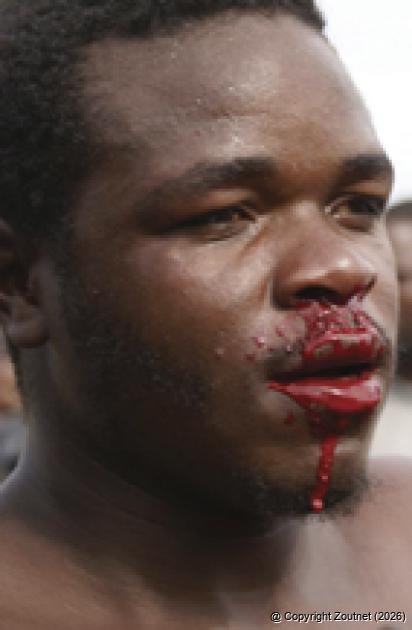
Bleeding is part of the game …
Bare fist fighting: A new threat to locals?
News Date: 11 January 2008
The organiser of musangwe or bare fist fights, Tshilidzi Ndevana, popularly known as Poison in fighting circles, discounted fears that fighters were exposed to communicable diseases like Aids.
He said this after an outcry from the community that the sport involves heavy blows that always lead to bleeding, thus exposing participants to diseases. Mirror can today reveal for the first time that the fears were indeed genuine and true. An investigation by this newspaper revealed that no preventative measures were being followed when the fighters bled or were injured.
Blood was being handled with bare hands, as the fighters wore no gloves during the fight. There was a total disregard for the basic health rules that blood should not be touched using bare hands. Not even a single glove was in sight when the bloodied boxers were being taken from the ring.
The only precaution during the fights was that fighters were taken off the field to a nearby river to wash off the blood. Even here, no gloves were used and all were exposed to blood. At one stage one fight turned into a free-for-all, when an unruly boxer, who was possibly intoxicated, caused mayhem by fighting everybody, and many people were exposed to blood.
They immediately rushed to the river and stood in one line while washing, using the same water and exposing themselves to diseases too. A bandaged fighter, who preferred to remain anonymous, echoed the same fears when confronted about his safety in the ring. "I love fighting and I am aware of the dangers that are associated with it. No matter what, I won’t stop fighting," he said.
He said, however, that he wished the health department would send officials during the fights to help them in times of injury.
The investigation also revealed that the once revered and respectable sport has been highly compromised, with many young fighters arriving drunk. The discipline that once went with the sport is now lacking and there is no proper control during the fights.
Ndevana is the father of five and has been a bare-knuckle fighter since the age of 13, and is now promoting the sport in Gaba outside Thohoyandou. "We take the necessary precautions. We stop the fights as soon as someone starts bleeding," he said in an interview with Mirror.
Ndevana said that they have attended a workshop by health officials and were following strict instructions. "We have been taught to operate under conditions which are health friendly and we are doing as such," Ndevana said. Ndevana claims their sport is so clean that they were planning to approach the local organising committee of the 2010 Games that will take place on these shores with the view of claiming a stake as curtain raisers in some of the games.
Soon after these words, the fights started and fighters become bloodied. There were no stoppages. Some blood even spilled onto the spectators, who were children…
The bare-fist fights, or musangwe and shibakela, as they are known amongst the locals, have been popular amongst the VhaVenda people as well as the Machangana/Vatsonga people from as early as the 1800s. Fighters from one village would organise themselves and challenge fighters from other villages for no monetary rewards.
The fights this week were characterized by a lack of discipline from the side of the spectators and fighters alike.
Ndevana appealed to the government to help build stands for him, or a mini-stadium that would make it easy to control the crowds, as incidents of ill discipline among the crowds are the order of the day.
The spokesperson for the Department of Health in the province, Mr Phuti Seloba, said that it was not their function to stop a sport that has become so popular amongst the locals. "We cannot disrupt the sport because of the fears, but we can look at ways in which we can work with the community to avoid cross infections," he said. He called on organisers to make prior arrangements with the department so that emergency services members could be dispatched to help casualties. Seloba further said that there was a need for health education in the communities rather than stopping the age-old sport of musangwe.
Written by
Elmon Tshikhudo
Elmon Tshikhudo started off as a photographer. He developed an interest in writing and started submitting articles to local as well as national publications. He became part of the Limpopo Mirror family in 2005 and was a permanent part of the news team until 2019. He currently writes on a freelance basis, covering human rights issues, court news and entertainment.

ADVERTISEMENT: