
ADVERTISEMENT:
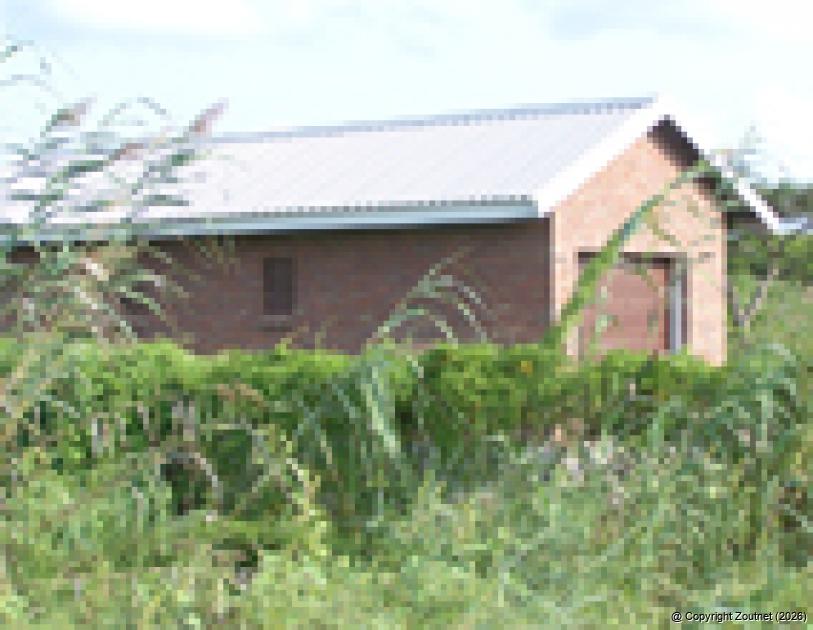
The unused sewage pump station in Grobler Street, which was built several years ago but was never finished.
Discarded pump station could have solved sewage problems
News Date: 21 March 2008
White elephants are a dime a dozen in modern-day South Africa, and although the concept has changed somewhat over the years, it still denotes something that is acquired at cost, requires maintenance and fulfils no discernable function. Such is the case with the sewage pump station in the vlei in Grobler Street in Louis Trichardt.
The proverb about a white elephant originated when a king in the ancient East received a white elephant as a gift. Initially, he was very happy as it was a very rare animal. The problem was, elephants are used in Thailand and India for gruelling manual labour. White elephants, however, could not be used in such a way as they were regarded as holy and needed special food and care. Eventually, a white elephant became a symbol of anything that is costly and requires upkeep but serves no real purpose.
The Makhado Municipality probably has several such white elephants. If the community can function without the item in question, one could perhaps argue that it is not such a great loss, although any waste of taxpayers’ money is to be deplored. However, in the case of the pump station, built to handle about seven times the capacity of the pump station currently in operation in the vlei, one has to wonder, especially since the station currently in use often overflows with the raw sewage spilling over into the adjacent vleiland. The fact that the new station was completed several years ago (in 2003), at a cost of more than R1 million, just adds to the confusion about the municipality’s apparent lack of planning.
The station was built by Rubicon Civils and was designed to deal with the growth in sewage foreseen in terms of the expansion of the town, including Makhado Park. This means that the current problems experienced by many residents when manholes become blocked and overflow as a result of capacity exceeded could have been alleviated years ago and need not have occurred at all. According to Mr Dries Briers, the man in charge of the construction of the pump station, work on the station was halted when the project ran out of money. As a result, the pumps needed to deal with the effluent, as well as the labour involved in linking the station with the current sewage system, could not be supplied and the project remains unfinished to this day.
The sad part about the matter is that the cost of the pumps and the labour to install them has more than doubled in the time that the station has been unused. Taxpayers’ rands will obviously have to pay for the work and equipment whenever the money becomes available. The only bit of light at the end of the tunnel (if Eskom does not manage to take care of it) is that talks are currently underway between the municipality and several consultative engineering firms on addressing matters such as the water problems, the pump station and other matters related to the town’s infrastructure. Readers will be kept abreast of any developments in this regard.
Written by
Nic Hoffmann

ADVERTISEMENT: