

ADVERTISEMENT:
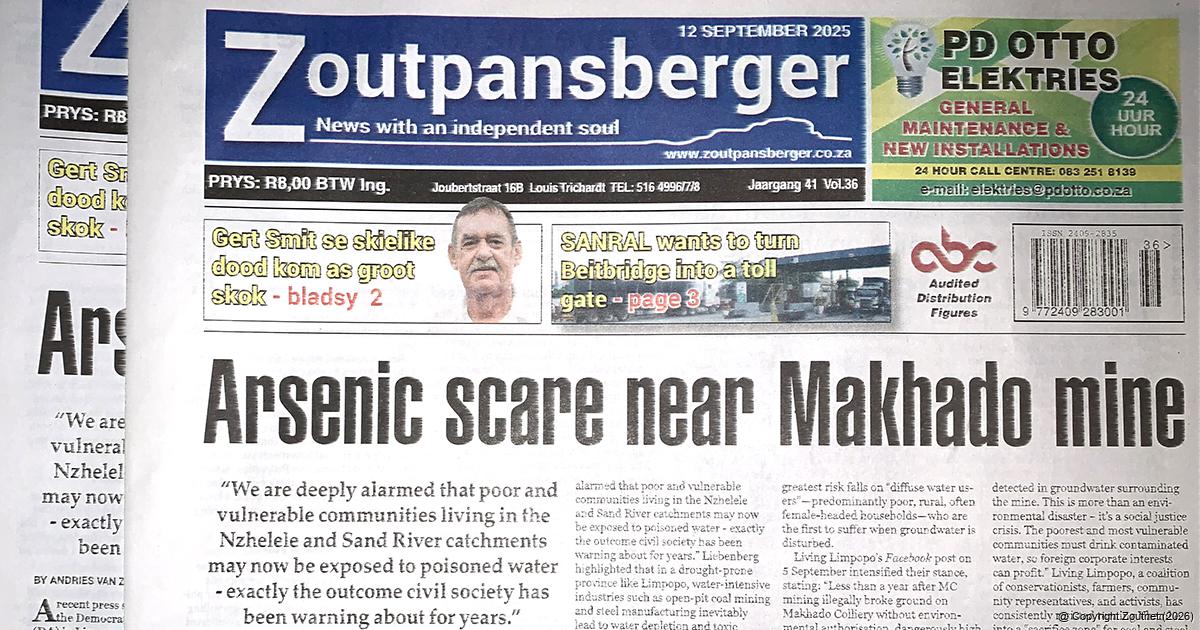
Because the Zoutpansberger has always been close to its readers, we do not want to make decisions without first speaking to our local community. On Monday, 15 September, at 17:15, we have scheduled a meeting at our offices at 16B Joubert Street. If you want to make suggestions, or even confront us about the direction we may take, please feel free to attend.
Should we put up a fight for the local voice?
News Date: 13 September 2025
Last week we published an open letter to our readers, explaining the dire situation in which local newspapers such as the Zoutpansberger find themselves. The letter was in Afrikaans, so we thought it proper to follow up this week in English.
I doubt many of our readers will be surprised to learn that the Zoutpansberger is also battling to survive. The newspaper that has shared the Soutpansberg region’s proudest moments, but also its tears and frustrations, may have reached its end.
Over the past year we have seen many print titles disappear, including well-known publications such as Beeld and Rapport. There are many reasons for these closures, but the main one is declining revenue, with an advertising model usurped by the big tech companies.
To many of us, myself included, a world without newspapers is a terrible thought. A newspaper is much more than a random summary of the main news events. It is a compendium of relevant information, carefully selected and curated by a team of passionate men and women. It is a reflection of our present, noted down for generations to come. A newspaper serves as both watchdog and guide, while trying hard not to choose sides or divide its readers into “us” and “them”.
The way we communicate changed
The Zoutpansberger did not lose many of its readers. The latest ABC figures show an audited circulation of 1,543, an increase on the previous period. (Multiply that roughly by four to calculate readership.) Because of the language mix, the newspaper serves a very small market, but this has been the case since it was launched in January 1985.
What the paper did lose is the advertising support of businesses. This was the result of many changes over the past decade or two.
The business environment changed first — from locally owned stores to branches of national chains. Malls sprang up, charging high rents with the promise of thousands of feet passing by, with no need for further marketing. The national stores seldom support local media with advertising and, if they do, it is on their terms, leaving little room for profit.
But the biggest disruptor was — and still is — the tech companies. New ways of communication emerged, such as social-media platforms. The Internet grew bigger and bigger, with its wealth of knowledge. Artificial intelligence entered our lives.
To a great extent, all of this arrived without a price tag for the consumer. Or at least it appeared that way. The old adage applies here: “If you don’t pay for the product, you are the product.”
The big tech companies quickly got the masses hooked, whether on social media platforms such as Facebook or on search engines such as Google. Once they had learned all they could about user behaviour, they started selling it to advertisers.
Sadly, there is very little morality in advertising. Advertisers chase eyeballs, no matter where they can find them, at the cheapest price.
Newspapers had to start competing with cat videos, fake news platforms and fitness apps. New competitors, such as “influencers”, arrived on the scene, selling commodities linked to “likes” and “shares”.
Where to from here?
“You should just go digital,” we are often told.
Well, we have been in the digital sphere since 1997, running some of the oldest news websites in the country. The digital world, however, is all about quantity, not quality. The creator of yet another cat video can collect 10 million views and rake in advertising revenue. Compare that to a well-researched investigative article, which may be read by only a few thousand people. Based on common online monetisation models, that will bring in less than R100.
The product that still pays journalists’ salaries is the trusty newspaper. Unfortunately, rising printing costs and declining advertising support mean the Zoutpansberger is running at a loss.
If the situation remains the same, the last edition will appear at the end of December this year.
But we have not stopped fighting. We are talking about a product that has been part of the local community for more than 40 years. We believe it is worth saving, even if it means a drastic change in business models.
If advertising support picks up, the product becomes viable, and we can continue. We still have a few very loyal advertisers such as KFC, Ayob Motors, Hammann Properties, Action Ford and a dozen or so others you will find in our business directory. If you value the local newspaper, please thank them by supporting them.
A fresh start
One idea we are considering is placing the Zoutpansberger in the care of a non-profit company. This may open more options for philanthropy. We could approach funders willing to sponsor certain projects or even a dedicated reporter.
We also hope to move to a new website platform in the next few weeks, which would allow us to experiment with innovative revenue models. This could include a form of subscription, or even an option to watch a short video which, in turn, sponsors the subscription.
Another option is to change from a weekly publication to a fortnightly or monthly one, with a shift in content focus.
Because the Zoutpansberger has always been close to its readers, we do not want to make decisions without first speaking to our local community. On Monday, 15 September, at 17:15, we have scheduled a meeting at our offices at 16B Joubert Street. If you want to make suggestions, or even confront us about the direction we may take, please feel free to attend.
You can also send your thoughts to [email protected] or WhatsApp me at 084-616-4997.
Written by
Anton van Zyl
Anton van Zyl has been with the Zoutpansberger and Limpopo Mirror since 1990. He graduated from the Rand Afrikaans University (now University of Johannesburg) and obtained a BA Communications degree. He is a founder member of the Association of Independent Publishers.

ADVERTISEMENT: