

ADVERTISEMENT:
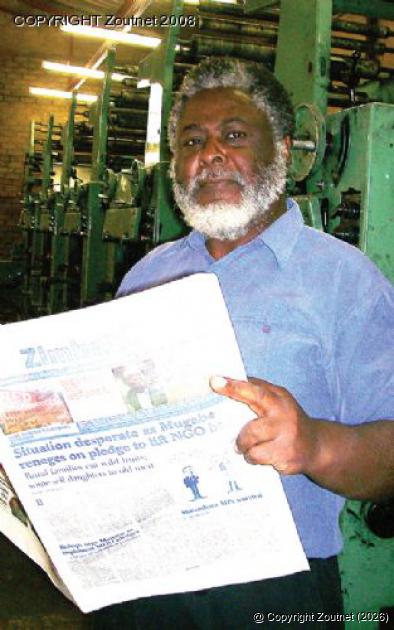
The editor and founder of The Zimbabwean, Mr Wilf Mbanga, was photographed during his recent visit to South Africa. The picture was taken at The Zimbabwean’s offices in Louis Trichardt. Mbanga is now based in the United Kingdom (UK).
Zimbabwean’s editor in exile fights on …
News Date: 29 August 2008
Many people take press freedom for granted. South Africans have become used to the fact that the government of the day can be criticised in the press or other media. This democratic right has been enshrined in the Constitution of the country, along with religious freedom and freedom of association.
The same, however, cannot be said about our troubled neighbour,
Over the past decade or so, the laws governing the rights and freedom of parties who oppose the ruling party and its president, Robert Mugabe, have become more and more draconian, to the extent that the editor of The Zimbabwean, Mr Wilf Mbanga, a veteran in the news business of over 40 years, has had to relocate to the UK in order to escape further persecution by supporters of the regime.
Currently, many of the staff members of the newspaper are residing in Louis Trichardt, while a few have joined their editor in
Mbanga used to work for a state-owned newspaper, sprouting propaganda in favour of Mugabe and his cronies. When he became too critical of the dictator and his antics, he fell from grace, necessitating his resignation. He then started The Daily News, a newspaper which quickly became very popular in the country. Its circulation soon reached 130 000 per day, making life very uncomfortable for those in power.
The result of this was Mbaga’s detention and persecution in ways reminiscent of a spy novel. After one such period of detention, he challenged the government’s actions in court, with the justice system on his side. The government refused to accept this and kept on appealing against the verdict.
A foundation from
With the country’s high inflation rate, the paper has become “the most expensive paper in the world,” at a selling price of Z$500billion per copy.
When printing costs started becoming a problem, the decision was taken to look for a South African company who could do the job. ClipXpress in Louis Trichardt was a viable option and this company currently takes care of the printing. Printing costs were not their only problems, however. Although the government ostensibly allows the paper to be distributed in the country, it charges an “import duty” which is more than the price of the paper. When one of the trucks taking the paper into the country was stopped by pro-government forces, the driver was beaten and the truck was set alight. These factors have really affected the circulation of the paper, since people can no longer afford to buy it. The fortunate few who manage to procure a copy sell it to others when they have finished reading it.
Written by

ADVERTISEMENT: