

ADVERTISEMENT:
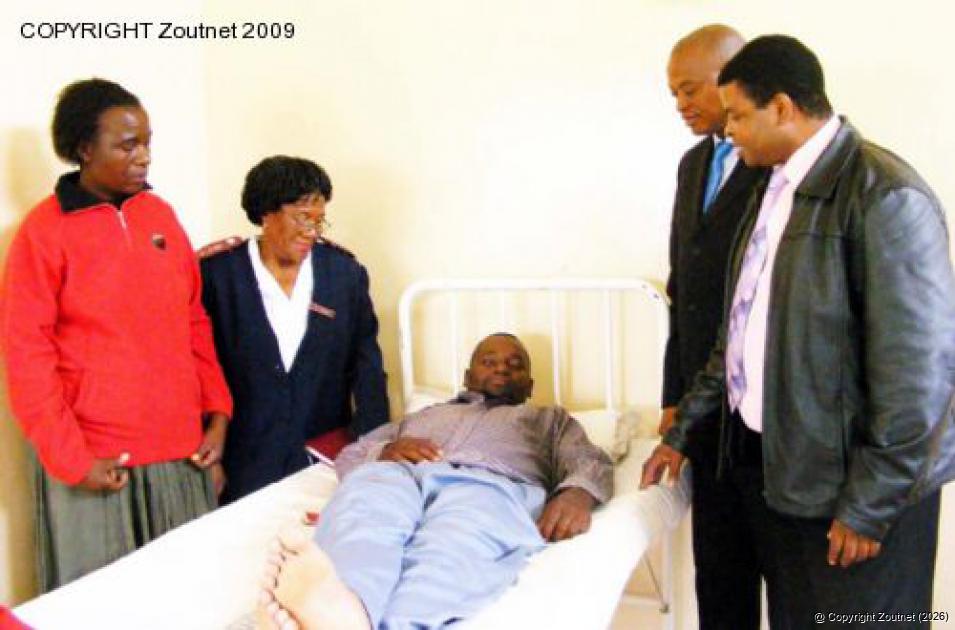
The executive mayor of Vhembe, Mr Philemon Mdaka, gives support to Mr Albert Zumba, who is infected with cholera. With the mayor is Mr Tshimauswu Nekhavhambe, the CEO of the Louis Trichardt Memorial hospital. From left are ward councillor Ms Nemalegeni Johana and operational manager Ms Violet Maboko.
Executive mayor visits cholera victims
News Date: 30 January 2009
The executive mayor of Vhembe, Cllr Philemon Mdaka, put all duties aside last week on Tuesday to embark on a campaign to visit those affected and in-fected by cholera in the Vhembe district.
The aim of the visits was to show support to those affected by the killer disease and also to give them hope. The mayor visited the Louis Trichardt Hospital and Tshilwavhusiku health centre, where the latest cholera outbreak was reported.
According to the statistics at the hospital, more females are being admitted than males. The number of patients is increasing day by day because the origin of the problem has not yet been detected.
Speaking at the Louis Trichardt hospital, the mayor wished all the patients a speedy recovery. “Statistics show there is a large number of patients being admitted every day and this may cause overcrowding in the next two weeks,” he said.
The nurse manager of Louis Trichardt Hospital, Ms Constance Raulinga, said there is already a backup plan in place, should the hospital be overcrowded. “We have created a preparatory rehydration centre, which will help if the number of cholera cases increases, “she said.
So far, Tshilwavhisiku Health Centre has admitted 13 patients with cholera and the number is expected to increase. “Most of the admitted patients are from Madodonga village,” said Dr Salome Maswime. “So far, the situation is under control and the patients are re-covering,” she added.
The health centre has a big challenge in terms of a shortage of cleaners and food because of the rise in the number of patients. According to the co-ordinator of the cholera crisis centre in Tshilwavhusiku, Mr Mboneni Netshiswinzhe, community members of the Madodonga area are transporting the disease from their Zimbabwean colleagues from the farms were they work. “We visited the farms to check the conditions and we found out that it is very bad. Workers don’t have clean water and proper toilets,” he said.
The operational manager of the health centre, Ms Violet Maboko, said they had been running awareness campaigns around the villages to help people prevent the disease.
Written by
Zwikhodo Netshituni

ADVERTISEMENT: