

ADVERTISEMENT:
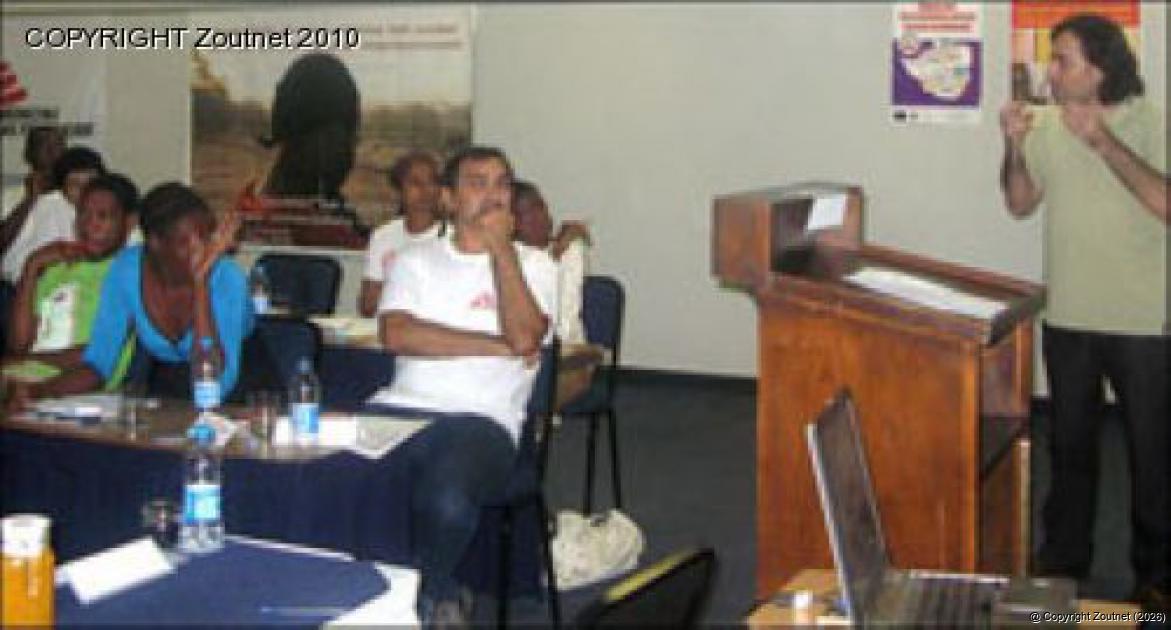
Medecins Sans Frontieres´ (MSF) project co-ordinator for Musina, Mr Giuseppe De Mova, addresses South African and Zimbabwean stakeholders during a recent workshop in Beit Bridge.
Increase in sexual abuse cases along border
News Date: 23 April 2010
Scores of Zimbabwean women illegally crossing the border to South Africa through undesignated entry points continue to be sexually abused by organized criminals, who operate along the borderline. Statistics indicate that 196 rape cases were reported between April last year and March this year. The statistics are contained in a Medecins Sans Frontieres (MSF) report, presented by the organisation´s project co-ordinator for Musina, Mr Giuseppe De Mova, during a recent workshop in Beit Bridge. He noted that many cases continued to go unreported as victims fear stigmatization. De Mova said an average of 16 border jumpers were being raped and robbed every month as Zimbabweans continued to stream into the country. “There are about 350 asylum seekers who visit the South African Home Affairs department every day and some of them come to our sexual and gender-based violence (SGBV) clinic for STI treatment. In the process, they also narrate their harrowing experiences on their way to South Africa through bushy irregular crossing points,” he said. He added that the concern was that most of them did not report to the police, "which in essence means that the statistics at hand are nothing, but the mere tip of the iceberg." De Mova said 61% of the victims made late reports, largely due to a lack of adequate information. He further noted that they had received 36 cases last month, but of those, only four were reported to the SAPS. MSF, which is also known as Doctors without Borders, has established SGBV clinics in the border towns of Musina and Beit Bridge and is mainly targeting in-transit truck drivers, commercial sex workers and sexually abused irregular migrants seeking STI treatment, trauma counselling, tetanus shots, HIV and Aids tests and anti-retroviral post-exposure prophylaxis (PEP). The case detection sites include SMG Musina police detention centre, refugee shelters and surrounding South African farms along the borderline. The hotspots for criminals, commonly known as agumagumas, are Tshikwalakwala, Makakavhule, Dite and Musina on the South African side of the border. “These criminals at times force their victims to have sex with their sisters at knifepoint after which they then rape them before robbing them of their money. Some of the women will be travelling with babies who, by virtue of being vulnerable, also fall prey,” said De Mova.
Written by
Mashudu Netsianda
Mashudu Netsianda is our correspondent in Beit Bridge, Zimbabwe. He joined us in 2006, writing both local and international stories. He had worked for several Zimbabwean publications, as well as the Times of Swaziland. Mashudu received his training at the School of Mass Communication in Harare.

ADVERTISEMENT: