

ADVERTISEMENT:
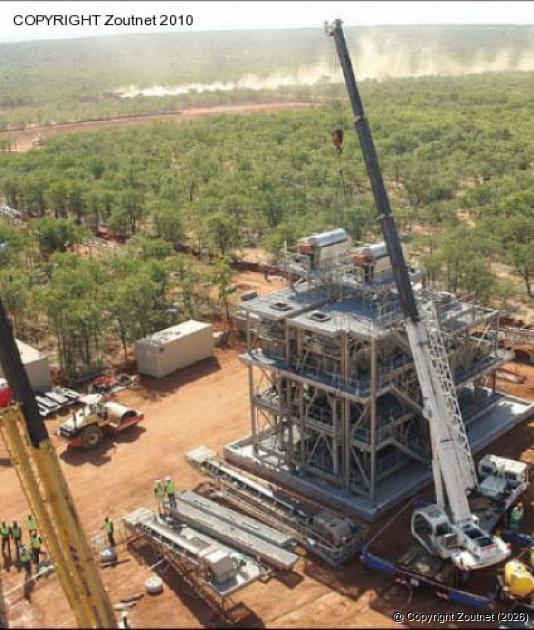
Since the start of the Vele coal mine project, the project has been shrouded in controversy. Earlier this year, the Green Scorpions temporarily halted activities at the mine.
Mine could cost thousands of farm workers their jobs
News Date: 05 November 2010
With the issuing of a water licence, basically the only thing standing in the way of the Vele coal mine´s becoming operational, CoAL of Africa has called a public meeting in Musina next week to discuss their application for an integrated-water-use license.
Since the start of the Vele coal mine project, the project has been shrouded in controversy. Earlier this year, the Green Scorpions temporarily halted activities at the mine. While many viewed this as a victory for the green sector, there were those, such as the mine workers union in Musina, who argued that stopping the mine will cost just over 400 mine workers their jobs.
But what about job losses when it comes to the potential negative effect the mine will have on the agricultural sector?
It is argued that more than 5 000 farm workers´ jobs in the Musina area may be seriously put at risk if the Vele coal mining project is to continue. Concerned groups claim that the coal mining project has the potential to destroy the extensive farming activities in this part of South Africa’s so-called Golden Horseshoe permanently. They say that regional and national food security, fresh water supplies and even the availability of unpolluted, clean, fresh air will be endangered. Serious concerns are also being raised about health hazards and crime in the neighbouring area and the effect of a drastic increase in road traffic, as well as an expected rush of numerous job hunters into the area.
These far-reaching consequences are emphasised by various experts, who are warning about the predictable, fatal consequences of what is termed as the present tsunami of dubiously issued coal mining rights in various parts of South Africa. Most of these concerns are contained in an official petition of concerned groups against the approval of the environmental management programme (EMP) of the Vele project.
Organized agriculture in Limpopo Province warned this week that the Makhado Project of Coal of Africa (in a 23 000ha wilderness area), the Vele Colliery project (covering an estimated 8 000 ha) and the Boikarobela mine at Steenbokpan on the Limpopo River near Lephalale, have disastrous, permanent, destructive potential not only for the Limpopo Province, but for the entire economy. With the mining ventures along the Limpopo River, the interests of residents in neighbouring countries like Botswana, Zimbabwe and Mozambique are also being prejudiced
Agricultural experts in Limpopo warned that the results of a continued coal-mining spree, unleashed by fatally flawed official procedures and existing legislation, were “potentially catastrophic.”
The chairperson of the Soutpansberg District Agricultural Union, Mr Stephen Hoffman, says: “South Africa is at this moment faced with the final choice: Long-term sustainable life, or short-term financial profits with long-term death and destruction.”
In a formal media release, Hoffman warns that mining is not sustainable.
“Agriculture can sustainably feed South Africa and the world for hundreds of years to come. Mining has a duration of 30 to 50 years and then leaves in its wake misery, distress, mine dumps, acid water and general devastation. It is the exploitation of a non-renewable asset at far-reaching environmental costs. Pollution is unavoidable. Water sources will unavoidably be polluted and even permanently destroyed in these mining ventures. Can the province and the entire country afford the large-scale destruction of a scarce resource like water?” Hoffman asks.
Scientists focussing on known unavoidable pollutants like acid water, dust and coal smoke resulting from spontaneous combustion of compacted low-grade coal waste, say coal mining and healthy agricultural production are mutually exclusive.
The existing extensive farming activities, especially along the Limpopo River in the Weipe area, are therefore seriously at risk. The proposed massive coal mining operation right next to the international heritage site of Mapungubwe and surrounded by the Greater Mapungubwe TransFrontier area will, according to experts, not only cause permanent damage to the natural and cultural environment, but will also result in an enduring major health hazard. It is said that it will destroy a significant part of the long-term sustainable food production potential in the province and will cause the loss of several thousand jobs for residents of Limpopo; result in the termination of millions of rands in export revenue for the province; may put an end to affordable food prices for all; cause irreparable damage to strategic infrastructure; place the important food-processing industry in Musina in jeopardy and deal a heavy blow to cultural and eco-tourism and to productive upcoming farmers in the Vhembe area.
The predictable further pollution of the water in the Limpopo River might also have embarrassing international repercussions for South Africa. Allowing the Vele mining project to continue on the strength of the EMP which the minister prematurely approved, will place South Africa in breach of its international legal obligations on the use of shared water course systems and the SADC protocol on mining. Mining in this particular area will also breach South Africa’s international obligations in relation to the protection of biodiversity.
Next week’s public meeting in Musina will be held on November 10 at 10:00 at the Musina Agricultural Hall.
Written by
Frans van der Merwe
Frans van der Merwe is a freelance journalist with more than 40 years experience in the newspaper industry. Apart from newspaper reporting, he was also involved with radio news, news reading, training and marketing. He has been living and working in Louis Trichardt since 1991.

ADVERTISEMENT: