

ADVERTISEMENT:
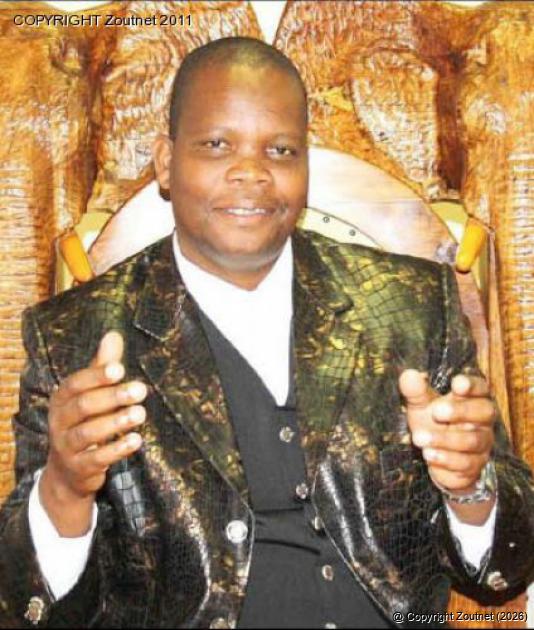
Chief Toni Mphephu Ramabulana.
Nephawe application gets struck off court roll
News Date: 28 January 2011
An urgent application by the legal team of Mr Tshidziwelele Nephawe to have people punished for allegedly referring to Chief Toni Mphephu Ramabulana as King of the Vhavenda, was turned down in the High Court last week. Nephawe’s legal team argued that the Minister of Co-operative Governance, as well as the Mirror newspaper, is guilty of contempt of court in that they disobeyed a previous interdict.
The case was supposed to have been heard in the Thohoyandou High Court last Thursday (20th), but was struck off the roll by Acting Judge Piet Ebersohn. He ruled that Nephawe’s legal team did not follow court procedures when filing the urgent application. To prevent further wasted costs being incurred, the judge made the decision prior to the hearing and refused to enrol the matter.
The judge was seemingly not impressed by Nephawe’s legal team and immediately set a date for a hearing to determine who will be responsible for the wasted cost. The Registrar of the Court was ordered to compile a report within two days, explaining why certain practice rules had not been followed. The applicant’s attorney was also instructed to file an affidavit before January 26, 2011 to explain why the rules were not adhered to.
To make matters even gloomier for Nephawe’s legal team, Judge Ebersohn instructed them to be in court on March 22 and be prepared to address the Court on why an order should not be issued that they pay the cost and not their client.
The latest flawed urgent application brought by Mr Tshidziwelele Nephawe follows a long battle for kingship of the Vhavenda. It officially started in 2004, when the Nhlapo Commission was tasked to investigate the matter. Their research included conducting hearings and collecting written submissions from the concerned parties. Following the hearings, the commission conducted its own research, and the various parties had an opportunity to respond to the evidence submitted.
The Nhlapo Commission investigated the claims of five groups to the title. Three of them claimed the restoration of kingships, namely Tshidziwelele Azwidowi Nephawe, Toni Peter Mphephu Ramabulana and Azwianewi David Mutshinyalo Ravhura. There were two claims to new kingships, namely that of Midiavhathu Prince Kennedy Tshivhase and Phaswana Musiiwa Michael Mphaphuli.
The claim from the Vhangona (presented by Mr Azwidowi Tshidziwelele Nephawe) to the title was based on the fact that they were the earliest known inhabitants of the present-day Venda and beyond. The Vhangona originate from Matongoni in Central Africa, where their traditional leader, Mwali, stayed. They gradually moved south and eventually settled, under leadership of their king Tshidziwelele, at the Soutpansberg Mountains.
The Nhlapo Commission found that, even though the Vhangona were an independent traditional community, with their own cultural and linguistic elements, they lost their independence and identity when they were conquered, absorbed and assimilated by the Masingo and Bapedi.
The Commission was of the opinion that the kingship of Vhavenda was established around 1600 by Dimbanyika. Dimbanyika ruled from 1688 to 1722 and successfully led his people when migrating south from Mapungubwe (which was in the present-day Botswana and Zimbabwe). He settled around the Soutpansberg mountains where he established the first Dzata. At this stage, the traditional community was known as the Masingo or Makwinda. Dimbanyika conquered or subjugated other communities, such as the Vhangona and Vhatavhatsinde, and merged these into a new traditional community, called Vhavenda, the Nhlapo Commission argues in its findings.
The Commission investigated the bloodline of Dimbanyika and refers to a number of submissions in this regard from different parties in its report. The customary law of succession was also taken into account to decide which customary practices were resorted to, to determine a king. The Commission also judged the status quo and looked at whether or not a kingship was established and if so, if such a kingship could be restored.
In a speech on 29 July last year, President Jacob Zuma announced that the kingship of the Vhavenda as a whole had to be restored under the lineage of Mphephu Ramabulana.
This announcement caused some dissatisfaction in traditional leadership circles and several parties announced that they would oppose the decision. The Tshivhase dynasty announced that it would ask for a review of the process. The Nephawes went further and on 23 September, obtained a court interdict to stop the inauguration of Toni Mphephu Ramabulana as the new king.
This application was granted by the High Court and basically stops the President of South Africa from issuing a certificate recognising Chief Toni Mphephu Ramabulana as King of the Vhavenda, pending the finalisation of a review application.
What apparently sparked the latest anger from the Nephawe group was an announcement made on 5 November 2010 on Phala-Phala FM, whereby the Minister for Co-operative Governance and Traditional Affairs referred to Toni Mphephu Ramabulana as the King of the Vhavenda. It was allegedly stated that the inauguration of the king would go ahead. This was denied by the Office of the State Attorney in Thohoyandou, who argued that the Minister was quoted out of context. Nephawe’s legal team did not agree and felt that the Minister should be held in contempt of court.
In a photo that appeared on November 5 in the Mirror, reference is made of Toni Mphephu Ramabulana as “King of the Vhavenda”. According to the documents served on the Mirror, this is evidence of the fact that the Minister’s statement encouraged other persons to also undermine the court order. Ironically, the article appeared before the Minister’s alleged announcement on radio, and not a week later as stated in the court documents.
The action of publishing the photo is, however, regarded by Mr Nephawe as a clear defiance of the court order and in his application he says the perpetrators should be “committed to a term of imprisonment or imposed with a fine deemed appropriate by the Court.” The provision is, however, made that such a sentence be suspended should the Minister and the newspaper apologise within 10 days.
Both the Minister and the newspaper refused to do so. In its answering affidavit, the Mirror argued that it was being dragged into a fight that had very little to do with the newspaper, apart from its reporting on the matter. “It is not for the messenger to decide on these issues. Mr Nephawe is fully entitled to challenge the decision, but he cannot stifle freedom of speech by threatening people with court action,” Mr Wikus Lee, editor of the Mirror newspaper, said this week. According to him, the newspaper was never made aware of the court ruling on September 23 last year and reported in good faith on the facts as they were at the time of going to press. “Mr Nephawe lodged an objection against the process and the High Court later allowed time, so that his grievances can be heard. This does not invalidate the announcement by the State President,” said Mr Lee.
In its answering affidavit, the newspaper argues that, on several occasions, the applicant’s legal representative was warned that it was causing unnecessary legal expenses for its client. Such an application in the High Court becomes extremely expensive, especially when eight respondents are dragged into the matter. The wasted cost in this case already amounts to several hundreds of thousands of rands. Judging by what Judge Ebersohn has said, it may even be expected of the lawyers to foot this bill.
On Friday, Mr Nephawe’s legal representative, Khorommbi Mabuli Attorneys, approached the respondents, asking for permission to approach the judge directly and obtain more clarity on his ruling. They mentioned that their client was “extremely unhappy with the situation” and wanted the judge to explain why he had decided on the matter without hearing their arguments. “The matter is one of public and national interest and involves fundamental Constitutional issues,” they argue in a letter sent to Dr Suwil Rudolph, lawyer for the Mirror. At the time of going to press, it was not certain whether they had succeeded in procuring an appointment with the judge.
Written by
Anton van Zyl
Anton van Zyl has been with the Zoutpansberger and Limpopo Mirror since 1990. He graduated from the Rand Afrikaans University (now University of Johannesburg) and obtained a BA Communications degree. He is a founder member of the Association of Independent Publishers.

ADVERTISEMENT: